
Dehumidifier in Jacksonville & Northeast Florida
Hold the humidity where wood stays dry.
A sealed crawlspace still needs its air conditioned. A dedicated crawlspace dehumidifier holds relative humidity below the level where mold grows and wood softens, and drains itself so you never think about it.
Typical price$1,000–$3,000installed · market range, not a quote →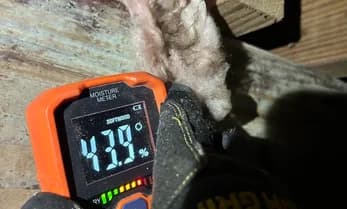
In their words
High humidity makes a mold/mildew air-freshener.
What's included
The actual scope
- Crawlspace-rated unit sized to the space
- Continuous drain to sump or exterior
- Humidity target set and verified
- Hung or set to stay above any water
- Annual check available
How it runs
Inspection to finished
- Measure the space and current humidity
- Written quote
- Install and set the target
- Verify readings before we leave
Terms, plainly
Free inspection. Photos and moisture readings delivered to you. A written quote with each solution priced on its own, so you can do it all or do it in stages.
A sealed, conditioned crawlspace
Where you live changes the job
Four kinds of ground, four versions of this job
Northeast Florida has four distinct ground conditions, and each one changes how we size and sequence this work. Your town page has the specifics.
Barrier islands and the Intracoastal
Full encapsulation with a sealed liner and dehumidifier, stainless or coated fasteners, and a sump where the water table reaches the crawl floor in storm season.
St. Johns River and tidal creek lowlands
Drainage first: a perimeter French drain and a sump sized for the volume, then a sealed liner and dehumidifier so the wood can finally dry out.
Pine flatwoods and hardpan
Vapor barrier or full encapsulation with a dehumidifier to break the humidity cycle, plus grading, downspout extensions and a French drain where water perches against the foundation.
Karst and clay uplands
Moisture control with a sealed liner and dehumidifier, drainage where clay holds water against the foundation, and an honest assessment of any pier or block movement before anything is sealed.
Questions about dehumidifier
Dehumidifier: what people ask
How much does a crawl space dehumidifier cost in Jacksonville?
Published 2026 cost guides put a crawl space dehumidifier at $1,000–$3,000 installed, depending on its capacity and how far the drain line has to run. Running one costs about $10–$30 a month, more in a humid summer.
Does an encapsulated crawlspace need a dehumidifier?
In Northeast Florida, almost always. Sealing the vents keeps humid outside air out, but moisture still comes from the house above, the plumbing and the ground at the edges, and something has to remove it. Florida’s code lists dehumidification as one of the ways to condition a sealed crawlspace (section R408.3).
What humidity should a crawl space dehumidifier hold?
The EPA’s guidance for homes is to keep relative humidity below 60 percent, ideally between 30 and 50 percent. A vented crawlspace in Northeast Florida can sit well above that for a whole summer, which is why the humidity target is set and verified when the unit goes in.
Can I put a regular dehumidifier in my crawlspace?
A portable unit from a store is not built for it: it has to be emptied or drained, it sits on damp ground, and it is not made to run under a house for years. A crawlspace-rated unit is sized to the space, hung or set to stay above any water, and drains itself.
Where does the water from the dehumidifier go?
Through a continuous drain line to the sump basin or outside, so there is no bucket to empty and nothing standing under the house. The line is part of the installation, which is one reason a crawlspace unit costs more installed than it does off the shelf.
Typical prices for every service are in the crawl space cost guide, and general questions are on the FAQ page.
Other things we fix while we are under there
- Vapor BarrierThe floor of a dry crawlspace.
- Crawl Space EncapsulationSeal it, condition it, forget about it.
- French DrainGive the water somewhere else to go.
- Sump PumpMove the water out before it does damage.
- ExclusionKeep the critters out for good.
- InsulationStop paying to cool the ground.
- Crawl Space Clean-OutStart from clean.
Not sure if you need this? That's what the inspection is for.
Free inspection anywhere in Northeast Florida, and an honest answer about whether it can wait.